Expanding Your Business
Should Come With Ease
As easy as counting 1-2-3. Unlike your average traditional financing. Guiding your complete lending experience every step of the way.
Benefits of Using Private Lenders for Business Lending
Simply fill out the online application to get prequalified for your loan
A financial expert will contact you within 24 hours with the best offers and solutions for your lending needs.
Review and finalize the details of the offer. Sign and celebrate!
Expanding Your Business
Should Come With Ease
As easy as counting 1-2-3. Unlike your average traditional financing. Guiding your complete lending experience every step of the way.
Benefits of Using Private Lenders
for Business Lending


Business Funding

Loan Options

Loan Calculator
Better Business Bureau
A+ Rated
Since 2008
Raised Over
$100MM+
Total Dollars
Funded
Helped Over
1,500+
Companies
With Funding
Managed Over
140+ Client
Portfolios
From Banks to Online Lenders: Understanding alternatives to traditional financing
When it comes to obtaining financing for a business, there are a variety of lenders and loan types to choose from. While traditional financing is the first option that comes to mind, private lending can offer significant advantages for certain types of businesses. Private lenders are typically more flexible in their lending requirements, and can often provide faster access to funding than banks. They also have a greater range of loan types and structures available, including asset-based lending and invoice factoring, which may not be offered by traditional lenders. Other types of loans available to businesses include:


What Is a Business Term Loan? A Simple G...
What is a business term loan? It is a lump sum of money that you repay over a set period, plus interest. Most term loans come with fixed monthly payments, so you always know what you owe. Owners use them to buy equ...
What Is Inventory Financing? A Simple Gu...
Running out of stock means lost sales. But buying stock takes cash, and that cash is often tied up elsewhere. That is the problem inventory financing is built to solve. Inventory financing is a loan or credit line...
Short-Term Business Loans: How They Work...
Short-term business loans give you fast cash and a quick payoff. They suit owners who need money for a clear, near-term need, like inventory, payroll, or a surprise repair. But the speed comes with trade-offs, incl...
Purchase Order Financing: How It Works a...
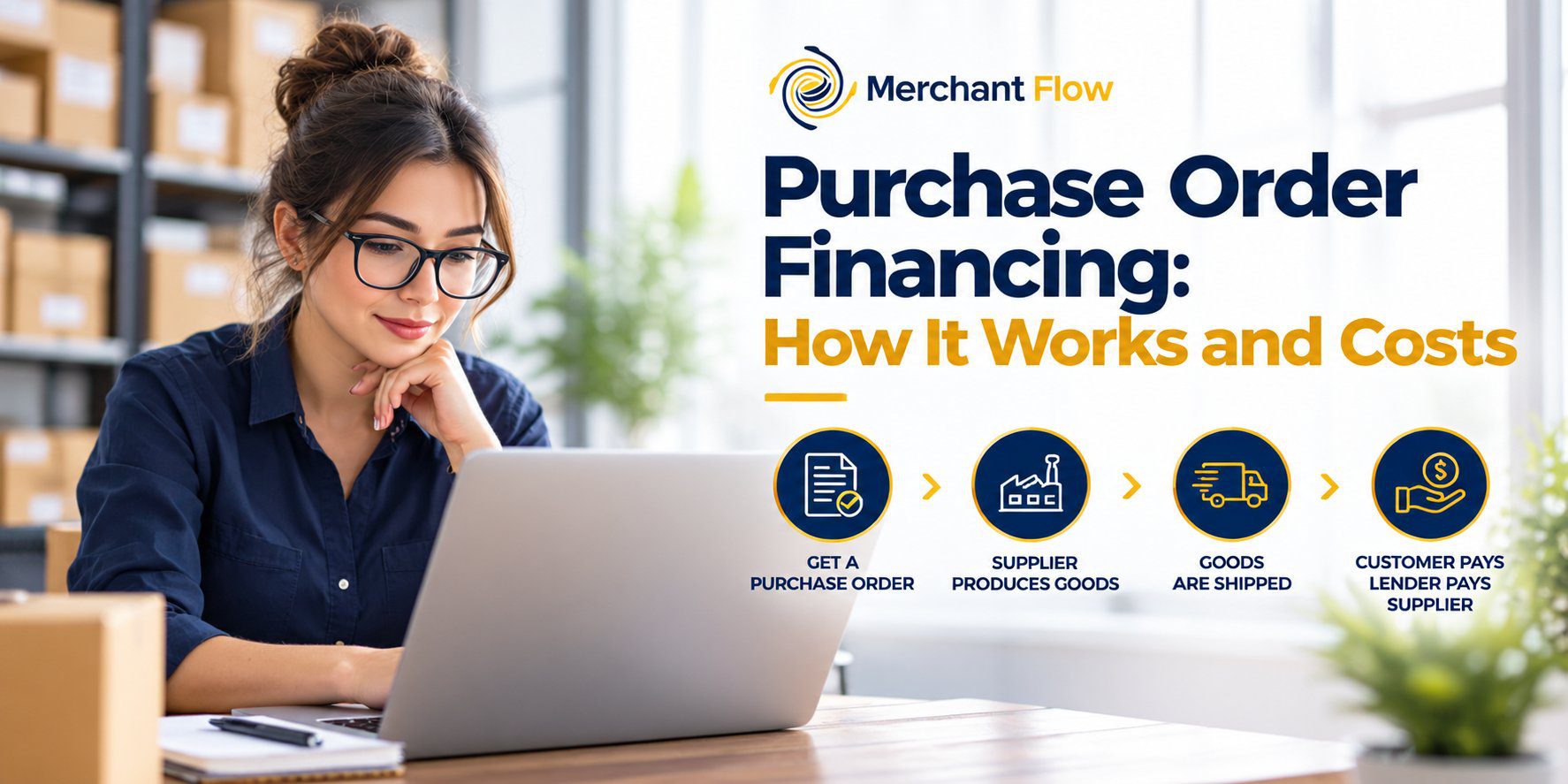
Purchase order financing helps you say yes to a big customer order when you do not have the cash to buy the goods. A lender pays your supplier, your supplier ships the order, and your customer pays the lender. You...
Purchase order financing helps you say yes to a big customer order when you do not have the cash to buy the goods. A lender pays your supplier, your supplier ships the order, and your customer pays the lender. You keep the profit after fees.
This guide explains how purchase order financing works, what it costs, and who it fits. It also shows how it differs from invoice factoring, so you can pick the right tool for your cash flow gap.
What Is Purchase Order Financing?
Purchase order financing is short-term funding that covers the cost of filling a confirmed customer order. It is built for businesses that sell physical products and have a purchase order (PO) in hand but not the money to produce or buy the goods.
Lenders look closely at your customer's credit, not just yours. That makes it an option for newer businesses that may not qualify for a bank loan.
How Does Purchase Order Financing Work?
A lender pays your supplier directly, so your supplier can make and ship the order to your customer. When your customer pays, the lender takes its fees and sends you the rest.
Fit Small Business describes the process in these steps:
- You receive a PO from a business or government customer.
- You get a cost estimate from your supplier.
- The lender reviews the order and the credit of your business and your customer.
- If approved, the lender pays your supplier, often up to 100% of the order cost.
- The supplier delivers the goods, and your customer is invoiced.
- Your customer pays the lender, usually within 30 to 120 days.
- The lender deducts its fees and sends you the balance.
How Much Does Purchase Order Financing Cost?
Fit Small Business reports fees of about 1% to 6% per 30 days. It estimates the APR at 20% to 80%. Funding amounts range from $10,000 to $10 million, based on the same source.
Fees add up each month until your customer pays. A slow-paying customer raises your total cost. Check your profit margin before you apply, because the fees have to fit inside it.
Who Qualifies for Purchase Order Financing?
Most lenders want a few things before they approve an order:
- A confirmed PO from a business or government customer, not an individual shopper.
- An order for finished, tangible goods. Services usually do not qualify.
- A creditworthy customer and a creditworthy business.
- A profit margin large enough to cover the fees.
- Documents such as the PO, the supplier cost estimate, and financial records.
Some lenders also ask for upfront fees or a personal guarantee. Read the terms closely before you sign.
Purchase Order Financing vs. Invoice Factoring
The two tools solve different timing problems. Purchase order financing helps you fill an order before you have an invoice. Invoice factoring gives you cash against invoices you have already issued.
If your goods are delivered and your customer owes you money, read our invoice factoring guide. For general cash needs, see our explainer on working capital loans.
Frequently Asked Questions
Purchase order financing is a short-term funding option where a lender pays your supplier so you can fill a customer order. The lender is repaid when your customer pays.
Fit Small Business reports fees of about 1% to 6% per 30 days, which can work out to an estimated APR of 20% to 80%. Fees build up each month until your customer pays.
Usually not. It is meant for orders of finished, tangible goods sold to other businesses or government buyers.
No. Purchase order financing helps you fill an order before you have an invoice. Invoice factoring advances cash against invoices you have already issued.
Is Purchase Order Financing Right for Your Business?
Purchase order financing can turn a large order you cannot afford into real revenue. It works best when you sell physical goods to creditworthy business or government customers and your margins can absorb the fees.
Not sure which funding fits? Merchant Flow Financial can review your situation and match you with options. Contact us or start an application to see what you qualify for.